
Understanding Internal Family Systems (IFS): Parts, Protection, and the Healing Role of the Core Self
March 2026 | Sydney Metcalf
Internal Family Systems (IFS) helps individuals understand protective “parts” shaped by early experiences and reconnect with their Core Self. Developed by Dr. Richard Schwartz, this approach fosters healing through curiosity and compassion. Some integrate spiritual meaning, as described by Jenna Riemersma, while therapy remains inclusive, supporting emotional integration and connection to beauty, meaning, and restoration.
Internal Family Systems (IFS) is an evidence-informed therapeutic model developed by Dr. Richard Schwartz that helps individuals understand and heal the inner emotional “parts” that shape their thoughts, behaviors, and relationships. Rather than viewing symptoms as pathology, IFS recognizes that internal experiences often arise from protective strategies developed across the lifespan. This approach is grounded in compassion, curiosity, and respect for the complexity of human experience.
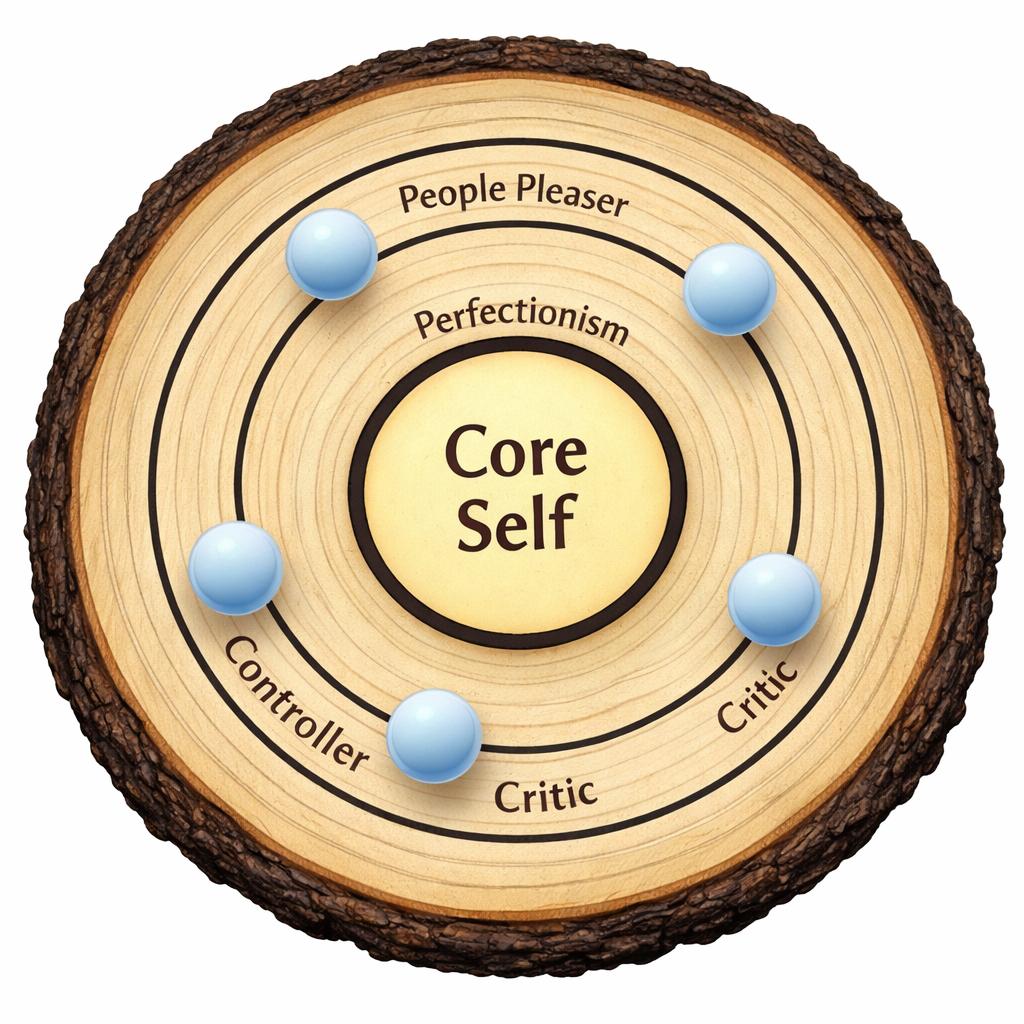
IFS offers a framework for understanding how different aspects of our inner world interact. Some parts may carry pain from earlier life experiences, while others work diligently to protect us from re-experiencing that pain. The goal of therapy is not to eliminate parts, but to build a grounded, compassionate relationship with them while strengthening access to one’s Core Self- the centered, wise, and integrative presence within.
The Core Self and the Eight C’s
At the heart of IFS is the concept of the Core Self. Dr. Schwartz describes this as a natural state of internal leadership characterized by what he calls the “Eight C’s”:
Calm
Curiosity
Clarity
Compassion
Confidence
Courage
Creativity
Connectedness
These qualities are not traits that must be earned; rather, they are inherent capacities that can become obscured when protective parts take over. Therapy aims to help individuals access and strengthen these qualities so that healing can occur from a grounded and integrated internal position.
Some clinicians and spiritual authors, including Jenna Riemersma, have explored parallels between the Core Self and theological concepts. Riemersma, writing within a Christian framework, describes the Core Self as reflecting the “image of God” and connects the Eight C’s with spiritual formation language such as the fruit of the Spirit. While these perspectives may resonate for some individuals, IFS itself is a psychological model and can be practiced in both secular and faith-integrated contexts. In clinical settings, it is important to allow clients to define meaning in ways that align with their own beliefs, values, and worldview.
Understanding Protective Parts
IFS identifies two broad categories of protective parts: managers and firefighters. These parts are not problems in themselves. Rather, they represent intelligent survival strategies that often begin in childhood or during times of emotional overwhelm.
Managers are proactive protectors. They work to prevent painful feelings from surfacing by maintaining control, structure, or performance. Examples may include perfectionism, people-pleasing, hyper-responsibility, or emotional withdrawal. These strategies often develop early in life when a child learns that safety or acceptance depends on meeting certain expectations or avoiding certain risks.
Firefighters, on the other hand, respond reactively when pain has already been activated. Their goal is to quickly extinguish emotional distress. They may use distraction, numbing, impulsive behavior, or other urgent coping mechanisms. While these responses can sometimes lead to consequences in adult life, their original intention is protective: they attempt to stop overwhelming emotional pain in the moment.
Both types of protective parts are motivated by care for the individual’s survival and functioning. Therapy helps individuals recognize that these parts developed in response to real needs and experiences, often at times when internal or external resources were limited.
The Role of Exiled Parts
IFS also describes “exiled” parts- aspects of the self that carry unresolved pain, fear, shame, grief, or unmet needs from earlier life experiences. These parts are often pushed out of awareness because their emotions feel too intense or destabilizing. Protective parts work hard to keep these experiences contained.
Healing involves gradually and safely getting to know these exiled parts. This process is not about re-traumatization, but about witnessing their stories with compassion from the grounded presence of the Core Self. When individuals can approach these early emotional experiences with curiosity rather than avoidance, integration and relief often become possible.
All Parts Have Value
A central principle of IFS is that no part is inherently “bad.” Even behaviors that create difficulty in adulthood often began as adaptive responses to stress, trauma, or relational disruption. Viewing parts through a lens of compassion allows individuals to shift from self-criticism toward understanding.
From a grounded internal state, therapy encourages curiosity about what each part fears, what it hopes to prevent, and what it ultimately needs. This approach fosters internal cooperation rather than internal conflict. Over time, protective parts can relax their roles as trust in the Core Self increases.
Building the Core Self Through Connection
Strengthening access to the Core Self is an essential aspect of healing. While IFS emphasizes that these qualities exist within, many individuals find that connection with sources of beauty, meaning, and transcendence supports this process. This may include experiences in nature, art, music, spiritual practices, relationships, or other encounters that evoke a sense of love, harmony, and belonging.
For some individuals, faith traditions provide language and imagery that support the experience of grounded presence. For others, connection with creativity, community, or the natural world serves a similar function. The therapeutic task is not to prescribe a particular framework, but to help clients identify and cultivate experiences that foster integration and emotional regulation.
Experiences of “perfect beauty” (moments that evoke awe, peace, or profound connection) can help individuals access states consistent with the Eight C’s. These moments often soften protective defenses and create space for internal healing work. When individuals feel connected to something larger than themselves, whether understood spiritually or existentially, their capacity for compassion and resilience often increases.
Childhood Origins and Lifelong Patterns
Many protective parts originate in childhood. Early relational environments shape how individuals learn to manage distress, seek connection, and interpret their own emotional experiences. Children naturally develop strategies to adapt to circumstances that may feel unpredictable, overwhelming, or unsafe.
In adulthood, these same strategies may continue operating even when they are no longer necessary. Therapy helps individuals recognize the historical context of these patterns while developing more flexible and adaptive ways of responding to present-day challenges.
Understanding this developmental perspective reduces shame and supports self-compassion. Rather than asking, “What is wrong with me?” individuals can begin asking, “What did this part help me survive?” This shift in perspective often opens the door to meaningful change.
The Therapeutic Relationship and Internal Leadership
IFS therapy emphasizes collaboration between therapist and client in fostering internal leadership. As individuals develop greater access to their Core Self, they often experience increased emotional regulation, clarity in relationships, and a stronger sense of personal agency.
The therapeutic process involves:
Identifying and understanding protective parts
Building trust between parts and the Core Self
Safely approaching exiled experiences
Integrating previously fragmented emotional material
Strengthening qualities such as compassion and confidence
Over time, individuals may find that internal conflict decreases and a more cohesive sense of self emerges.
Conclusion
Internal Family Systems offers a hopeful and respectful approach to emotional healing. By understanding protective parts, acknowledging early life influences, and strengthening access to the Core Self, individuals can move toward greater integration and resilience.
Healing occurs not by eliminating parts, but by listening to them. Through compassionate exploration and connection with sources of beauty, meaning, and relational safety, individuals often discover that the qualities needed for healing have been present within them all along.